Slayblade City Map & Day Loop
Read the miniature PS1 neighbourhood like a run planner, not a tourist brochure.
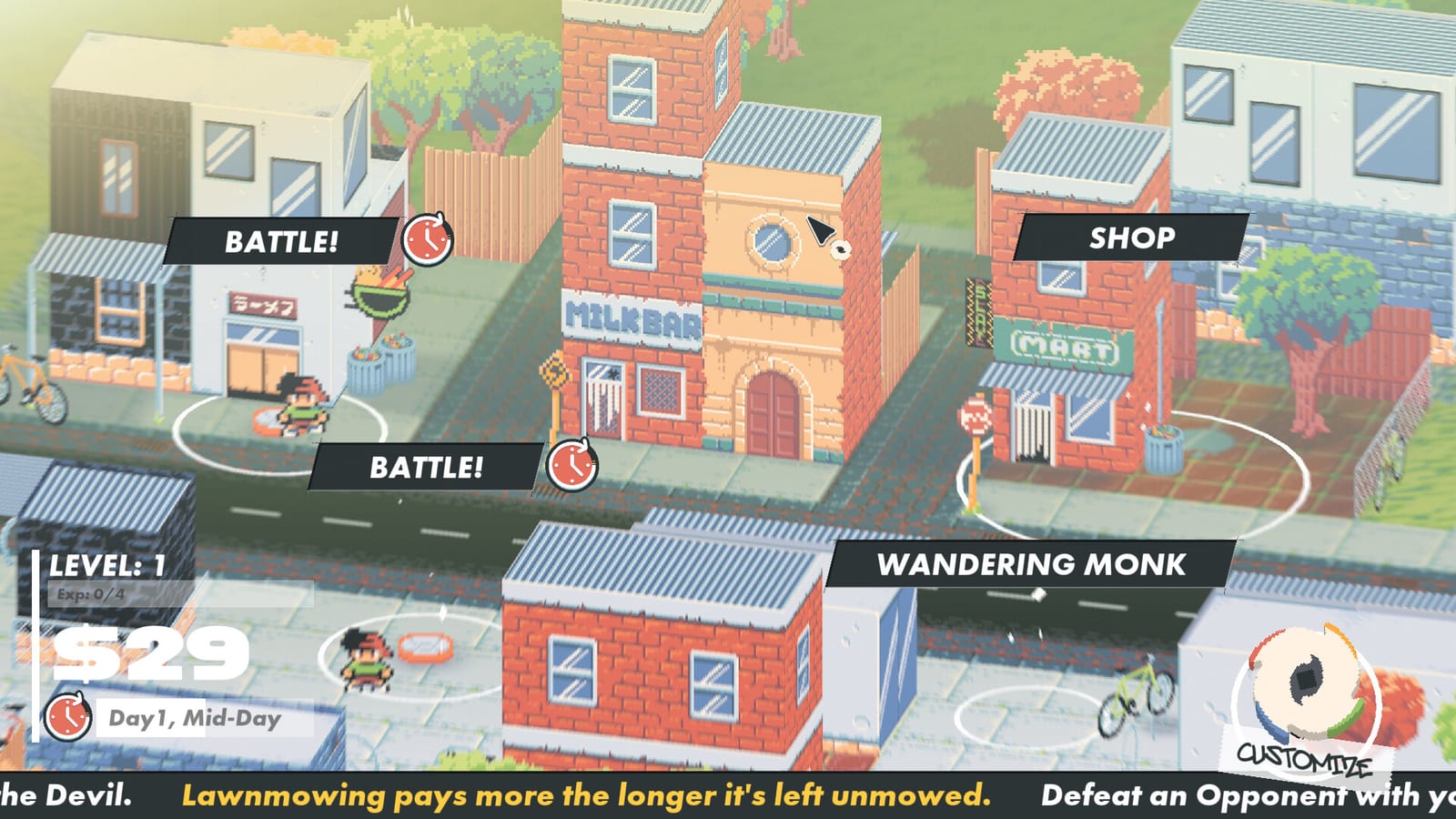
Slayblade’s miniature Y2K city is the real campaign map. Between battles you skate for cash, shops, chores, and risky alley fights. This guide explains how to read city nodes so each in-game day funds the next upgrade instead of a title-screen reset. If you only memorise arena physics and ignore the neighbourhood, you will keep arriving at shops broke and at illegal nodes undergeared.
What the city is for
Official copy sells skating a vibrant miniature PS1 city on the way to becoming King of the Streets. In practice the neighbourhood is a node graph: safe street battles, lawn mowing, sidewalk cash finds, shops for heads/bodies/tips, and illegal high-risk matches. The demo ends before the first tournament, but the city loop still teaches the full-game pacing—see Demo Progress and Tournament Prep. Treat every skate as a budget meeting with yourself.
Node types you will meet
Street battles print reliable cash and XP when your weight class matches. They are the default classroom for Controls and How to Win Battles. Lawn mowing is the boring printer—use it after two losses or when you need a buffer before shopping. Sidewalk cash is luck; grab it when nearby, never detour across the whole map for pennies. Shops sell the fantasy—fill empty slots first, then buy one active you can explain aloud (Part Combos). Illegal matches pay louder and hit harder—open Illegal Matches before you ego-click. League timers and phone teases in the demo exist to create urgency; they are not a command to bankrupt yourself today.
Day planning framework
- Open the map and mark one shop goal (missing tip, barrier body, cube engine).
- Pick two safe fights that fund that goal.
- Schedule one lawn if the wallet is thin.
- Ban illegal nodes until pulls and cubes feel automatic (Power-Up Cubes).
- End the day with cash buffer still intact per the Run Checklist.
- Write one sentence about what the city taught you before you quit the session.
Hubris warning from previews
PCGamesN and other previews note back-alley demons that delete undergeared kits and dump you to the title screen. That is a map skill issue as much as a combat one: the city offers the bait; you choose whether to bite. If a node looks out of class, skate past and farm. Feeling brave is not a weight class. Feeling broke is not a reason to take illegal content—mow first, then reassess (How to Earn Cash).
Linking city routes to builds
Barrier kits want safer centre fights while you learn lips. Drain kits can linger near longer bowls. Night vampire parts want you to schedule fights when the modifier is live—skip nodes, mow, then strike. Cube-hungry kits need fair open bowls before cramped alleys. Capture working routes beside Beginner Builds and only graduate routes when Advanced Builds match your narration skill. Cross-check part value on the Parts Tier List.
Demo cliff and full-game city
When the demo curtain drops before the tournament, your city literacy still carries. Wishlist the August 20, 2026 launch via Official Links, then re-run the same day plan with tournament fees in mind on Release Date. The neighbourhood will gain denser loops after launch; the discipline of skipping bad nodes will not change.
Practice drill
Play one demo day where you refuse every illegal node. Write which shops you reached and which parts you bought. Next day, allow one illegal only after the checklist is green. That contrast teaches the map faster than twelve rage retries. A second drill: pick a single shop goal and refuse every other purchase until it is done. Impulse merch is how maps feel “empty” when they are actually full of unused income.
Reading urgency without panicking
Timers, rival taunts, and “league soon” copy exist to push emotion. Translate emotion into a checklist item: Do I have slots filled? Do I have a kit sentence? Do I have a buffer? If any answer is no, the city is telling you to farm, not to sprint. Return to Getting Started if the whole loop still feels foggy.
Hardware and comfort on long skate days
Long map sessions still need stable FPS so mouse pulls stay honest—skim System Requirements. Take breaks between days so tilt does not rewrite your node choices. The city is small on purpose. Master the loop and the tournament will feel like a checkpoint, not a cliff. Keep this page beside the Guides Hub whenever a new preview invents a “must clear every node” myth—you do not.
Frequently Asked Questions
Quick answers to the most common questions.
Is there a full interactive map in Slayblade?
You skate a miniature city between nodes. Treat it as a day planner of fights, lawns, and shops rather than an open-world checklist.
Should I clear every node each day?
No. Skip over-levelled illegal fights and prioritise the shop goal that completes your kit sentence.
Where does lawn mowing fit?
Use lawns as low-risk income after losses or before expensive purchases. Details also live in How to Earn Cash.
Does the demo include the full city?
The demo teaches the city loop but cuts off before the first tournament. Progress still carries toward the full release.